
The idea of helping others has existed as long as humanity has existed, so it’s no surprise that volunteerism has come to be the widespread tradition it is today.
In the Middle Ages, volunteering was centered around religious duty and community care, occurring through hospitals and monasteries. Religious faith was the primary motivation for volunteering, and acts of charity were considered a way to achieve spiritual salvation. Estimates suggest that in England, hundreds of voluntary hospitals opened in the 12th and 13th century, largely driven by religious motivation.
The concept of voluntary aid laid the foundation for later organized efforts, such as the Elizabeth Poor Law of 1601 in England which mandated local government provision for the poor. This eventually led to what we know today as state-sponsored social welfare, which is deeply connected to old forms of volunteerism. States encourage and partner with volunteer organizations to deliver social services, and volunteerism can often supplement public services. The tradition of volunteerism is a true backbone of our society, bridging the gap between government authorities and real people.
First examples of formal volunteering in America began with Benjamin Franklin’s 1736 volunteer fire company in Philadelphia. Although the term “volunteer” appeared in military contexts earlier in the 1700s, the Union Fire Company was the first formal, secular volunteer organization in the U.S.
The usage of “volunteer” eventually expanded into the idea of community service. Community service was, and still is, the most common form of volunteerism in the U.S. Over 28.3% of the U.S. population ages 16 and over formally volunteered through an organization between September 2022 and September 2023, according to U.S. Census Bureau and Americorps.
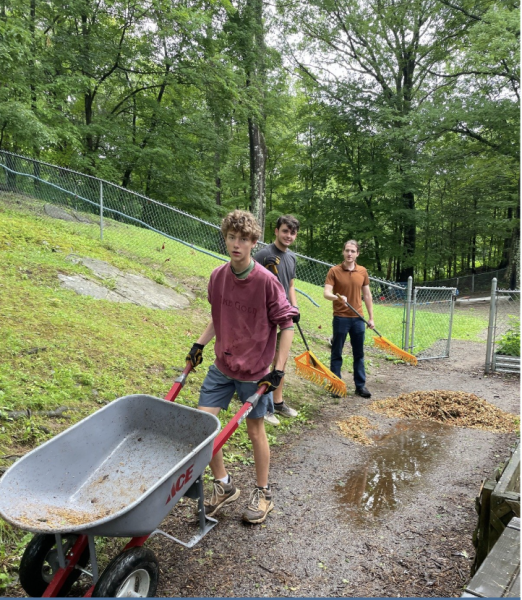
Several of the largest volunteer organizations were founded in the twentieth century to connect the volunteers from the army with social projects that improved their communities. Some of the organizations include Rotary International, Lions Club International, Kiwanis International and Association of Junior Leagues International.
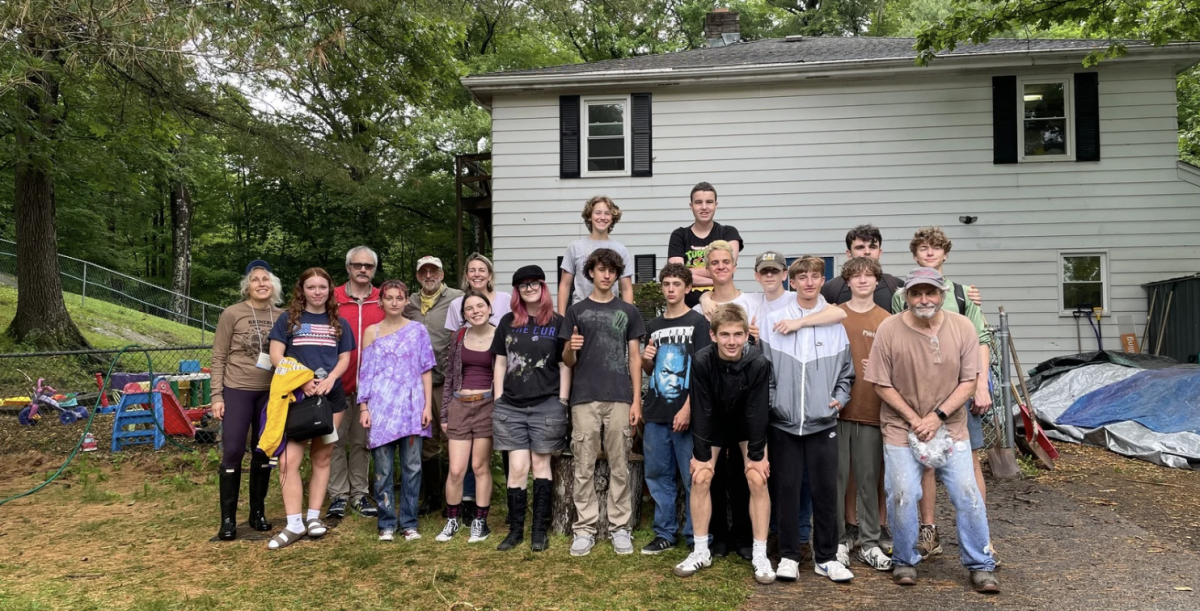
In Rhinebeck, volunteering is a very important part of the community. The Rhinebeck Parent Teacher Student Organization (PTSO), Rotary Club of Rhinebeck, and Rhinebeck Science Foundation are all volunteer-led organizations that support our community, and each has its own specific mission. At Rhinebeck High School, volunteering is strongly encouraged among students. Although there is no longer a specific community service hour requirement to graduate, all students must fulfill a meaningful volunteer experience. Tracked hours get shared with the National Honors Society, if you apply, and the Scholarship Committee. Any student with over 40 tracked hours can expect to receive an academic award.
The Community Service Advisory Committee of RHS, made up of Principal Ed Davenport, Mr. Stephen Boucher, and 3-4 teachers, selects meaningful community service activities to advertise to students throughout the school year. The Committee also organizes the Day of Service where all RHS students are invited to spend a day volunteering at local organizations, which can fulfill their graduation requirement.
Many RHS students are also involved in the Rhinebeck Interact Club, which is the youth portion of the Rotary Club of Rhinebeck. Interact Club has recently founded a sandwich-making club at RHS, donating all sandwiches made during meetings to a local food bank. Many clubs at RHS also frequently volunteer at local events.
Now more than ever, the tradition of volunteering connects us all. The idea of helping others is embedded in humanity. Volunteering can improve self-esteem, confidence, and wellbeing, create opportunities for social interaction, and increase happiness. A healthy life includes a healthy dose of volunteering.