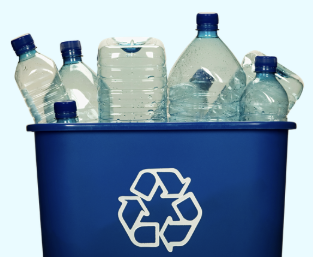
That post-recycling high is one not many people address. The dopamine boost one gets knowing as you chuck your plastic water bottle into that rectangular blue bin, you are single handedly saving our environment, one Poland Spring at a time. Now I hate to burst your bubble, but that rush is nothing but a ruse, as in Rhinebeck High School, all the recycling bins go straight back into the trash. Your recyclable materials later ride the dump truck to a local landfill. It seems insane. Why have the bins if you’re not even going to use them? Alas that is unfortunately the case, but you can take a sigh of relief knowing this issue is not going unnoticed. District committees, local clubs, and individuals are advocating for a more sustainable Rhinebeck High School. This means not only recycling bins that actually go into the recycling, but also the introduction of compost bins around the building and more reusable supplies.
Though John Hanley, Director of Facilities, never responded to inquiries regarding what the school is doing or will do to be more sustainable, Environmental Club Co-Presidents Joslan Carter and Amaia Hayes had plenty to say. Carter shared that “the school has very much prioritized sustainability”, using the recycling bins and composting program in the kitchen as examples, though she added use of this program and the bins is unclear. She hopes to see a mainstream composting system, having bins throughout the middle and high school, and in the long term would love to see a switch from paper to washable trays. She shared that this goal is a “larger scale project,” but emphasizes potential savings from no longer needing to buy trays on a regular basis, along with it being more sustainable than using compostable trays that cannot be composted when certain food oils interact the with materials.
Oftentimes it can feel difficult to make a difference in such a global issue, but taking small steps, like recycling can make a big impact. It’s easy to think that if you don’t make the switch, someone else will, making up for your hesitance to take action. But if we all have that mindset, no change will be made. There are numerous ways that not just our school, but you too, can help the global climate crisis:
- Recycle, Recycle, Recycle: Talking to your parents about recycling in your home can make a big difference. Local trash companies, like Waste Management, offer ways to recycle all sorts of materials in a bin right next to your trash can. Recycling makes sure that all materials that can be reused, are reused, in order to prevent overcrowding of landfills and reduce the amounts of new materials needed to produce everyday products.
- Compost: Every year nearly 63 million tons of food is thrown away in America (ReFed). Limiting the amount of food waste you produce doesn’t mean forcing yourself to eat when you aren’t hungry, or buying less food than you need. Composting is an amazing way to take your food scraps and turn them into a renewable resource. This could mean simply placing your scraps in a bin to use on your own accord, or working with local organizations like Village Compost to have your trash turned into treasure (humus, but still treasure).
- Switching to Reusable Alternatives: There is a large array of replacements for single-use plastics and other disposable items. Finding which of their replacements work in your day to day life and making the switch can lead to big changes. Reusable water bottles, tupperware, bags, utensils, personal care products, and more are all amazing alternatives and ways to live a more sustainable life.
In an ever growing climate crisis, lack of action is negative action, and our school could be doing more to give back to our community and world. It’s not all doom and gloom, the school does some things to be sustainable, but nearly all local establishments have implemented recycling, so why can’t we. It is worth the expense to take the steps towards sustainability, especially in a school environment. What is the point of teaching the younger generations and preparing them for the future, if their world will be inhabitable by the time they are adults?