Even as a student myself, I cannot provide a clear, comprehensive picture of artificial intelligence (AI) use in the Rhinebeck Central School District. For some, AI is seen as unacceptable; for others, AI use is a completely reasonable solution to everyday problems. As AI is being introduced into our lives via chatbots, search engines, or other forms, our view of and use of AI changes almost as rapidly as AI is being developed.
Asking students about their AI use does not provide a clear picture since most high school students prefer not to admit to using AI. However, they will admit that they know it is used by others in their school. Many students also mention their concern about the environmental impacts of AI or its effect on the creative process.
“The use of AI in school projects is detrimental to the creative and academic process. I understand that its presence in the real world means teachers feel pressured to include it in classes, but I think it’s more important that students learn to rely on their own instincts and follow their creative avenues,” shared 12th grade student Joslan Carter.
As we become more familiar with AI and its applications, we will slowly grow more used to it. It typically begins this way with the invention of new technology. Historically, many people were originally hesitant about the invention of writing, books, and reading. They viewed them as threats to memory, stability, and oral tradition.
When computers were invented, some people were quick to adopt them while others remained skeptical and only started using computers later. People feared job insecurity, assuming computers would take their jobs, deeming their employment as unnecessary. This fear is similar to how many of us feel about AI today.
Over time, although we’ve seen negatives from the invention of smartphones, particularly from the invention of social media, the positives are undeniable. Our world is becoming increasingly globalized with more and more knowledgeavailable at our fingertips each day. How we learn has been reshaped by technology with many programs and tests being entirely online. So, how is the rise of AI currently reshaping our classrooms now?
In a conversation with Ms. Baird, she mentioned how there has been a significant shift in the writing process. In the past, when one began writing any piece, they had to sit with a blank piece of paper. Whether it be on a typewriter, by pen and paper, or on an online document, writing began with an uncomfortable few minutes of not knowing what to write about and then having a random spark of creativity.
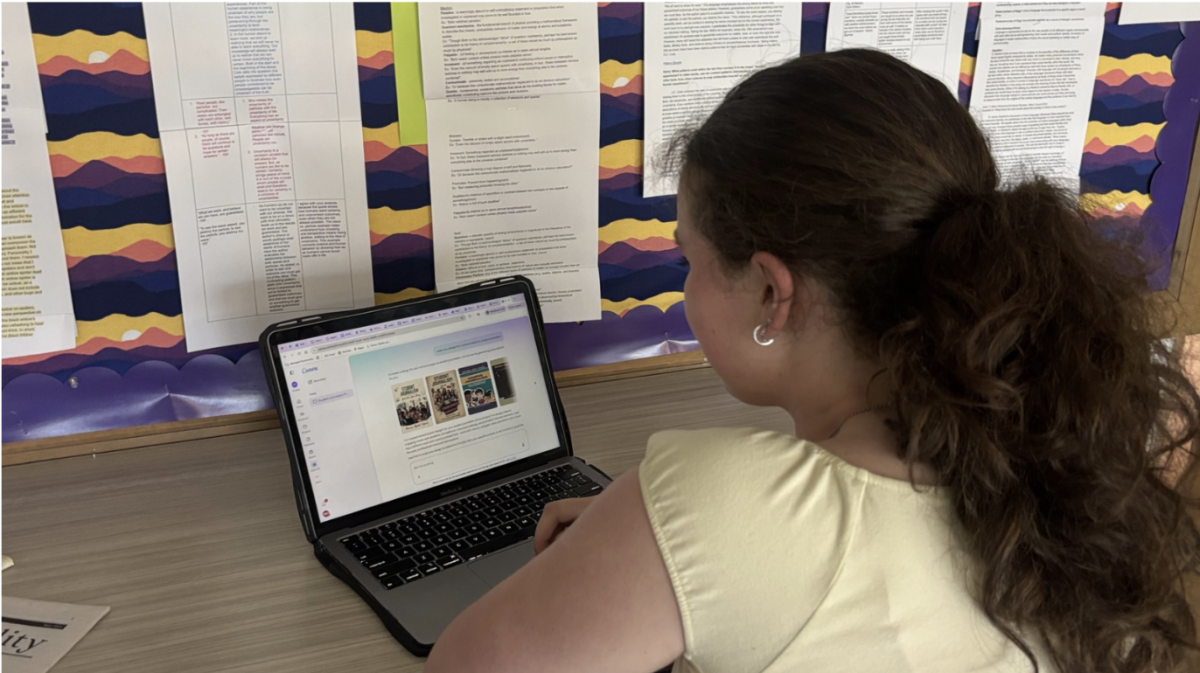
Today, if writing on an online document, we may not go through this same discomfort. When we search for anything online, at the top of the results in an in-depth AI overview. The writing process today for many students begins with a search, meaning the first thing one sees when beginning their writing is an AI generated answer. Although most students don’t actually intend to cheat, their exposure to this can have a significant impact on their writing. Since noticing this, some teachers have shifted away from allowing students to write at home or write online at all. In DCC College Composition 101 & 102 taught by Ms. Nelson, she works with students on pre-writing to prevent the use of AI to come up with ideas, which means that before beginning an essay, students prepare a thesis statement and evidence. In AP English Literature and Composition taught by Ms. Kufner, all writing assignments are done on paper in one class period.
This year in some of the French classes, Madame Cracco provided students with an opportunity to learn by using AI.
“As far as using it in the classroom, it’s been very limited. School.ai was where I was able to go and say the chatbot needed to take on the personality from a character in a story we were reading. But in my directives to AI, I said the bot needed to correct student errors in grammar/vocabulary. Students could get instant, personalized feedback. In a bigger class, you can’t always get to every student, and I think that can be kind of invaluable,” shared Cracco.
Mixed feelings about AI usage remain prevalent in classrooms. As AI becomes more embedded into our society, will schools have a responsibility to teach AI literacy to students? Should it be up to students to dictate their own AI usage? In the end, teachers, students, and administrators must learn to navigate AI together, or else AI use will remain a strictly covert topic in our education.